You Ordered Pizza, Not a Plan: Part 1
After 20 years in product, an uncomfortable truth: your strategic plan probably doesn’t contain what you asked for.
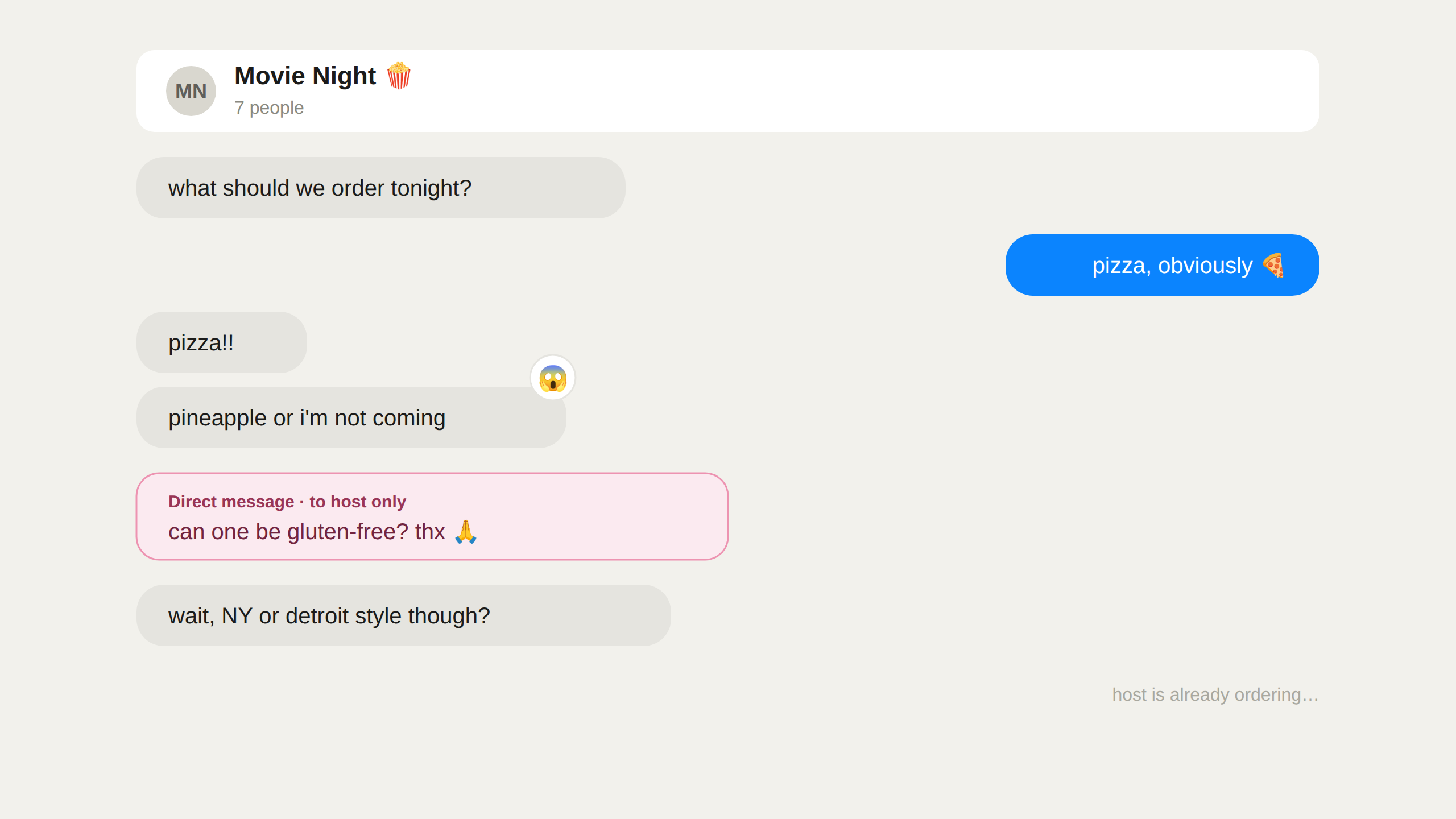
You’re on the group chat. Friends are hosting movie night and ask what kind of food to order for tonight’s gathering. You lead with a vote for pizza. A few more “pizza!” requests trickle in and the hosts, busy trying to tidy up, put a plan into motion. Your taste buds tingle. The hosts have proven to have great taste, but what exactly did you sign up for? Classic Neopolitan, New York, Roman, New Haven, Detroit? Maybe a white pie? Do they hate mushrooms? Did a different friend directly message the hosts asking for a gluten-free pie? What’s their stance on pineapple?!? And even if every one of you spoke up, someone still has to reconcile twelve opinions into one order, fast, before the hosts give up and just pick. You’re busy and a polite guest so you decide to let it ride and hope your taste buds get to realize your vision.
After 20 years of seeing product management operate at all different levels, I have a confession: when it comes to strategic planning, creating a plan is a lot more like ordering pizza over a group chat than you’d like to believe. Product is hosting and you’re all invited! Pull up a chair, the chianti is decanting…
Allow me to explain. For starters, I’m not talking about week-to-week execution like managing a sprint board or completing items off of a project plan. I’m talking about macro strategy: the stuff you can/should be doing at least yearly, ideally quarterly or better. These sessions give your strategy a minute to breathe. As a team, you step back and take stock of your business, the market, and your goals. You orient yourself to the environment and decide how you want to move forward as a unified organization. We’ll refer to it as “strat planning” going forward. Strat planning is essential for any organization that's learned that improvisation and heroics work in bursts, but eventually buckle under their own weight.
I’ve witnessed, participated in, and led many a strat-planning session. While sometimes it’s hard even to get key stakeholders to the table for those (topic for another article), I want to unpack what happens when Sales, Customer Success, Marketing, Finance, HR, Ops, the Board, the CEO and more are ordering “pizza.”
I’ve never seen a product manager deliberately and maliciously change an execution plan output from a strat plan, but I have seen things lost in translation. The reality is that connecting concepts at a higher level of abstraction like goals, targets, risks, cross-department budgets to low-level engineering execution plans is hard (I might have even started a company to tackle this convergence problem)! Anyone can set a goal and ratify it. The hard part is everything that happens after. Let’s look at an example:
Objective: Deliver a world-class onboarding experience that scales as we grow.
Directionally, most people in the space understand what this means. In pizza terms, you set a goal of “The pizza should look appetizing with a sturdy undercarriage easy to handle.” Great. That’s helpful (I guess), but there are many ways to achieve that. Of course, many organizations will bolster their Objectives with “Key Results” to further define what success looks like. While I’d love to make more forced pizza analogies, hopefully you get the point that there is A LOT of room for interpretation for how high level concepts are broken down into working plans. At the end of the day, there always needs to be an assumption + hypothesis taking a leap of faith it will deliver an abstract concept. The more abstractions, the more complex the system becomes. And clarity doesn't save you. A perfectly worded objective still has to survive contact with every other department's needs.
In many respects, managing this breakdown is the role of the Product department and we do this. Life and product planning are never that simple. Sales enters strat planning in with targets of A Units and $B in ARR followed by Customer Success targeting C% Net Retention with Finance/HR fixing a firm $D budget. Marketing needs Feature E available before the big user conference to sync with in-flight campaigns. Sprinkle in the CEO having a couple projects they’re passionate about (the gluten-free pizza ask/demand) and suddenly, you have more scope than what time and resources allow. Your beautifully constructed Objectives don't become achievable. They become stretch goals that never had a chance. Doomed at ratification, and waiting patiently to become next quarter's blame game. Compromises must be made, but by the time Product reaches these conclusions, the moment is over and all departments are back to their busy schedules. Do you call another massively expensive meeting to rehash the plan? Sometimes that works. Usually, I see Product forced to scramble and send lengthy emails back up long distribution lists. Often, the Board caught wind of the immediate results from strat planning and those expectations are locked in. “Hope” has quietly become the strategy.
It's frustrating because nobody in that room fought for a bad outcome. Sales wanted aggressive targets because that's the job. Finance held a firm budget because someone has to. Marketing needed the feature for the conference because the campaign was already generating buzz. Every ask was reasonable on its own. The problem was never the people or their intentions. The problem is that reconciling a dozen reasonable asks against a fixed budget, a hard deadline, and each other is genuinely hard. It doesn't resolve in a single sitting. It takes cycles of trade-offs, where moving one constraint ripples into three others, until the whole thing finally balances. That kind of iterative solving is exactly what a room full of busy people running out of time can't do. So it doesn't get done.
Have you ever been burned by pizza? Not literally, although that stinks and I'm sorry it happened. But if you've ever wondered how a plan resolved the way it did when you were sure you'd made your case, hopefully this sheds some light. You wanted Detroit-style pepperoni. You got a New York Hawaiian, plus a gluten-free pie that one person insisted on and everyone else paid for. Technically, it's all pizza. Competently made, even. Just not the night you pictured. In Part 2 of this article, I’m going to speak more on better practices for working with and through Product. While I can’t save your next movie night, I believe I can help with your next strat plan.
Put this to work: Strategic Alignment. Turning an offsite into decision rules, owners and a plan that re-runs.
← All writing